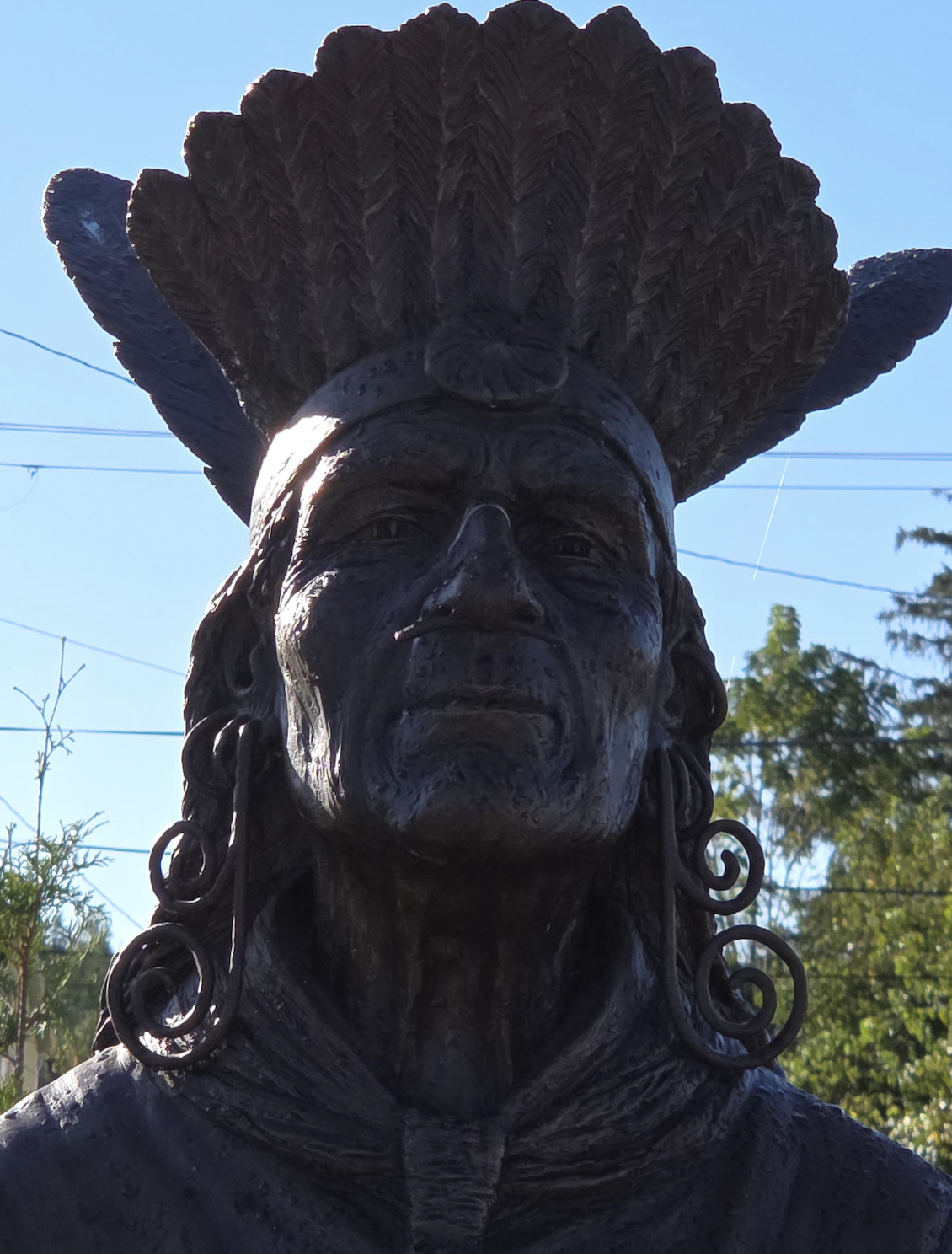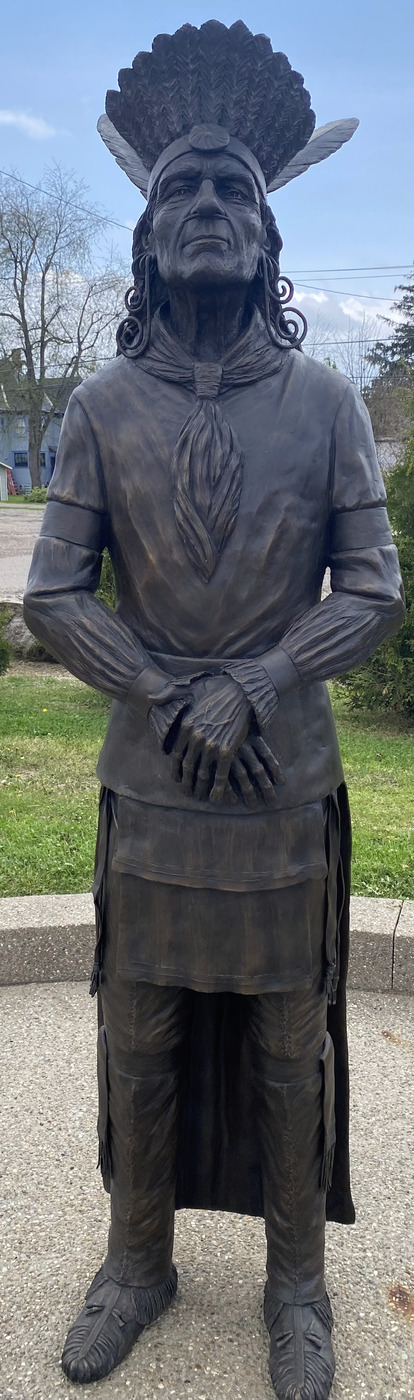
Long before it was a village, this was Gekelukpechink — "still water" — the Lenape town that gave Newcomerstown its name.

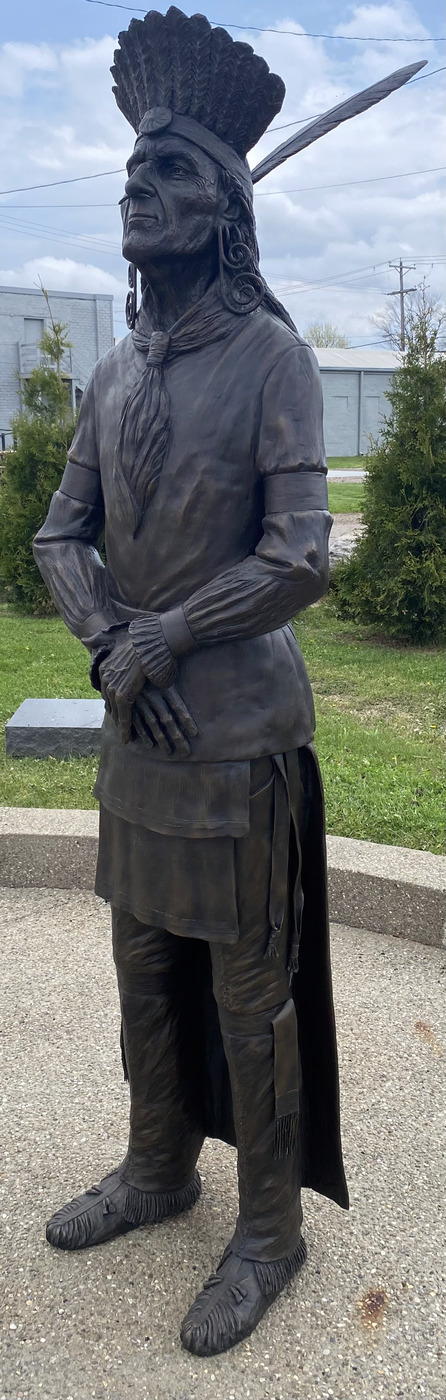
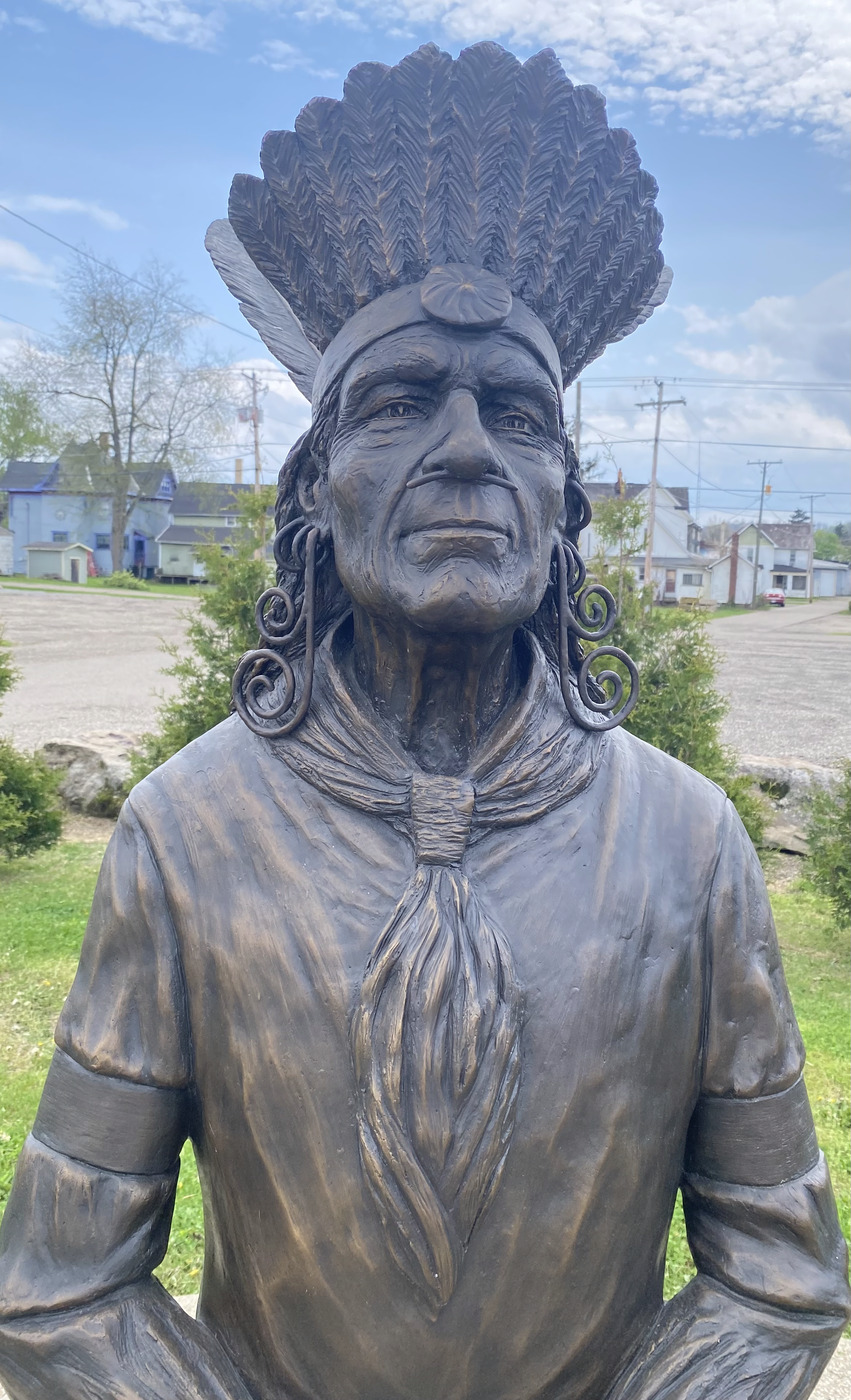
Born around 1686, Netawatwees — whose name means "skilled advisor" or "first in council" — was the sachem and spiritual leader of the Delaware (Lenape) people, recognized by settlers as the head chief of all the Lenape. English and American traders knew him as "Newcomer," or "King Newcomer."
During the French and Indian War he led his people west into the Ohio Country, settling where the Tuscarawas meets the Muskingum. The Lenape called his village Gekelukpechink — "still water" — and it became a capital of the Turtle Clan and a meeting place for the great councils of the region. Traders called it Newcomer's Town, the name our village still carries today. A wise counselor who signed many treaties, Netawatwees died on October 31, 1776.
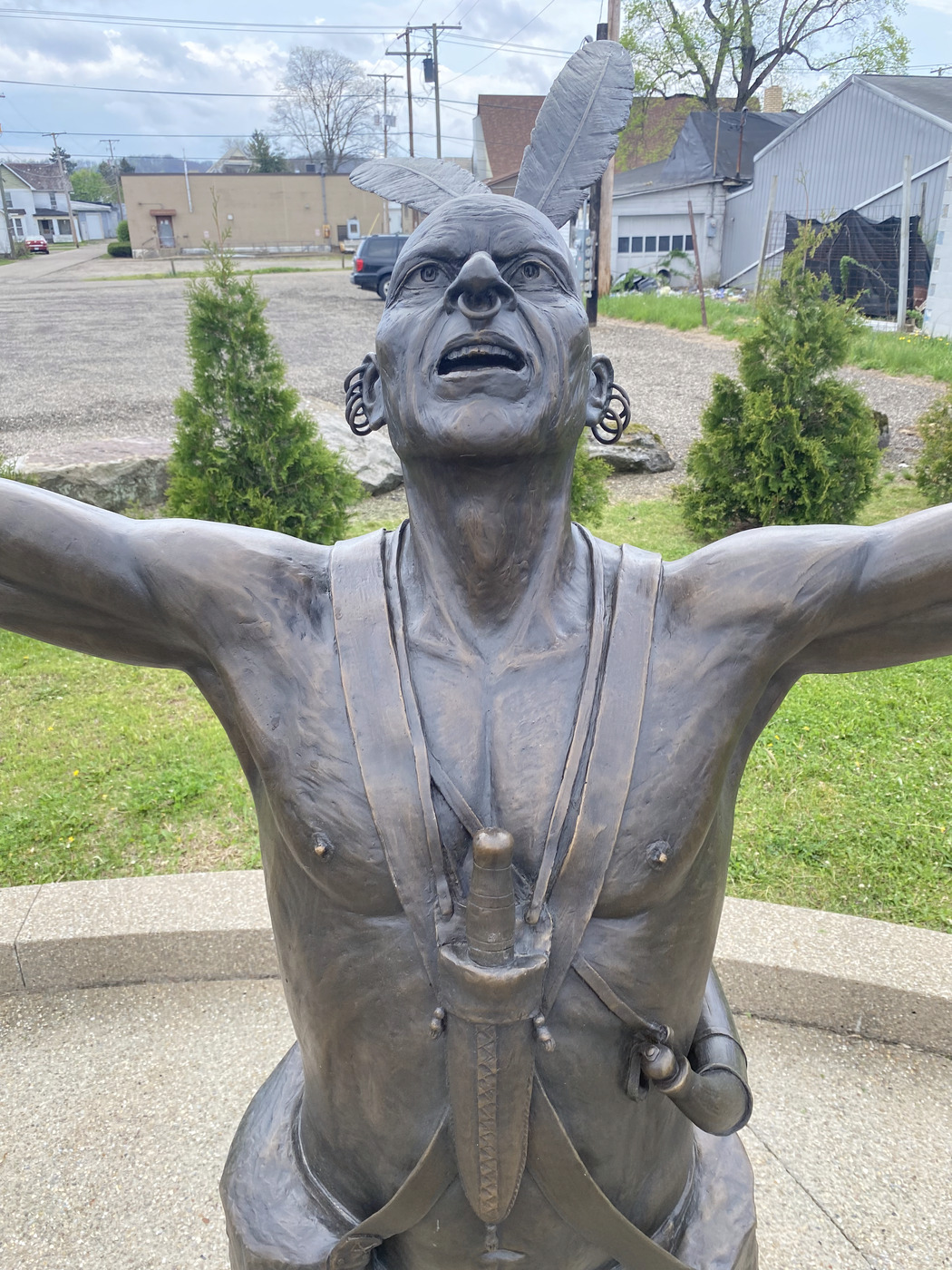
See the ArtifactsA son of Chief Netawatwees, Bemino — called John Killbuck Sr. by white settlers — was a renowned medicine man and war chief of the combined Delaware and Shawnee. During the French and Indian War he led warrior bands through the upper Potomac country of what is now eastern West Virginia.
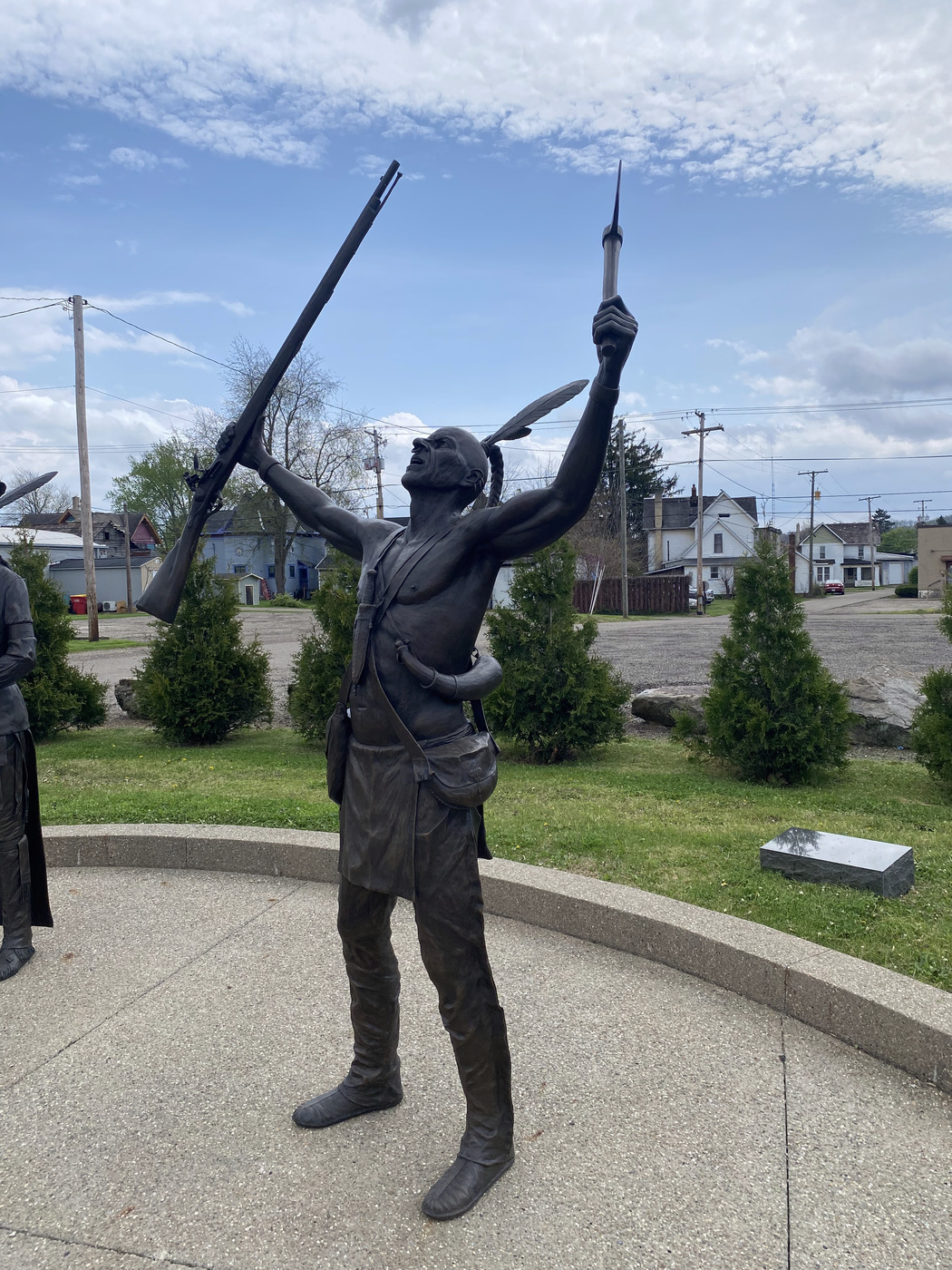
His own son, Gelelemend (John Killbuck Jr.), would become a leading Delaware chief during the American Revolution — three generations of Lenape leadership woven into Newcomerstown's story.

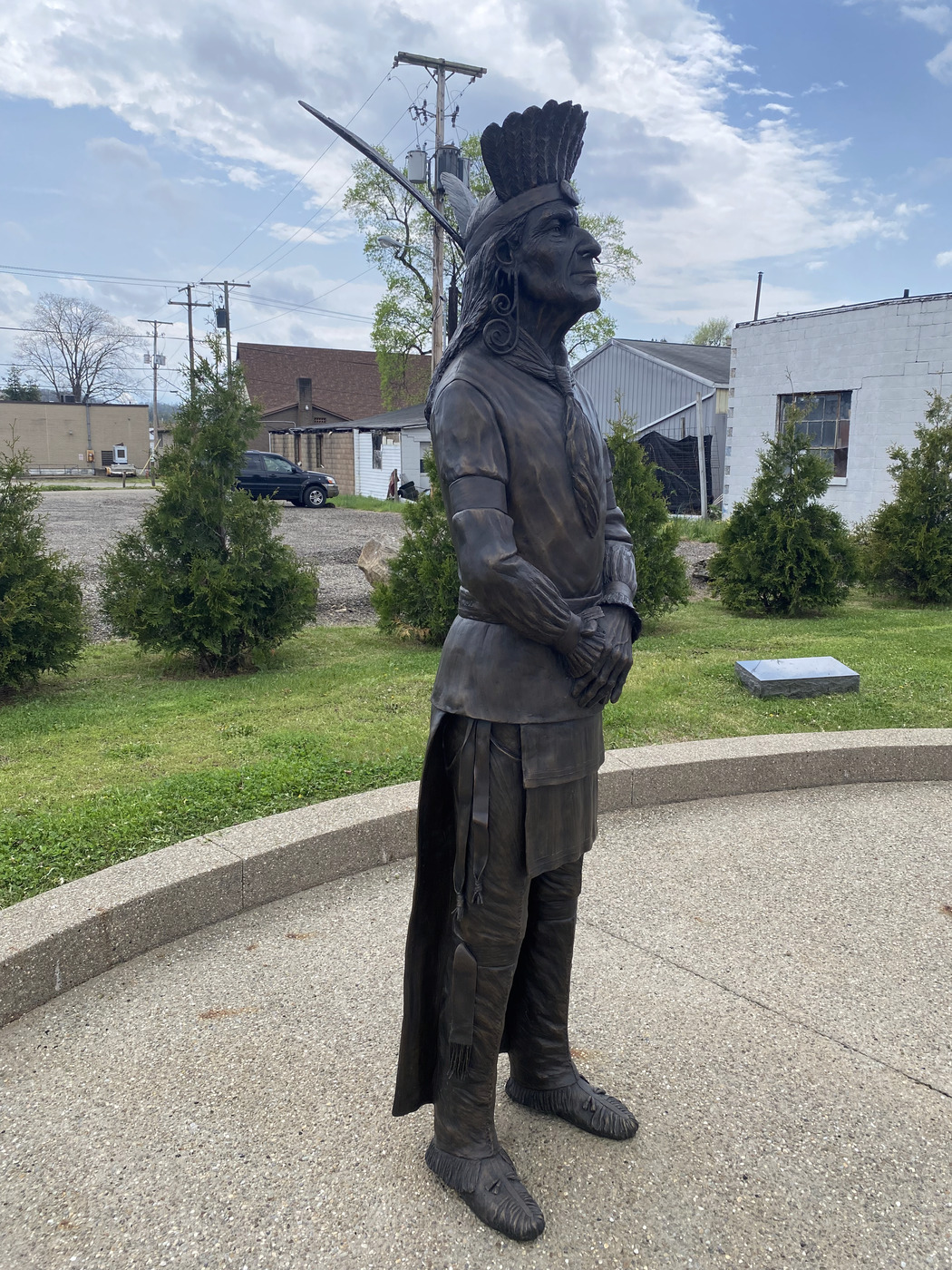
Sculpted by Ohio artist Alan Cottrill as part of Newcomerstown's Lenape Diaspora Memorial, these striking bronze statues stand in the village as a lasting tribute to the Lenape who first called this place home.


The Temperance Tavern Museum displays artifacts of the Turtle Clan of the Delaware Nation — the people who located their capital where Newcomerstown sits today.
Visit the Collection